Last Updated on 3 months ago
The Sweetest Season: How Maine Maple Syrup is Born
As the first crows fly in late February and the winter chill begins to soften, a magical transformation occurs deep within the Maine woods. From late February through mid-April, Maine’s majestic maple trees begin their annual flow of “sweetwater”—the clear, life-giving sap that serves as the foundation for pure Maine maple syrup.
The process of transforming this subtle sap into liquid gold is both an art and a science, requiring precision, patience, and a deep rhythm with nature. Dedicated syrup makers wait for the perfect “sugar weather”—warm, sunny days followed by freezing nights—to trigger the sap’s movement. Once it starts, the race is on to create the delicious golden syrup loved worldwide.
A Tradition Rooted in History
The story of maple syrup begins with the indigenous tribes of North America, who discovered the natural sweetness of the maple tree centuries ago. Native Americans traditionally collected sap in birch bark containers and used heated stones to boil it down into syrup and sugar, which became a vital part of their diet and trade.
European settlers later adopted these methods, introducing iron kettles and more efficient boiling techniques. While technology has evolved, the core principles remain unchanged: collect, boil, and enjoy the pure, unadulterated sweetness of nature.
The Journey from Sap to Syrup
A healthy, mature maple tree is a powerhouse of production, capable of yielding up to 60 gallons of sap in a single good season without any harm to the tree. However, nature is selective—it takes an incredible amount of sap to produce a small amount of finished product. After the boiling process, only about 1.5 gallons of syrup remains from that initial 60 gallons.
Harvesting the Liquid Gold
-
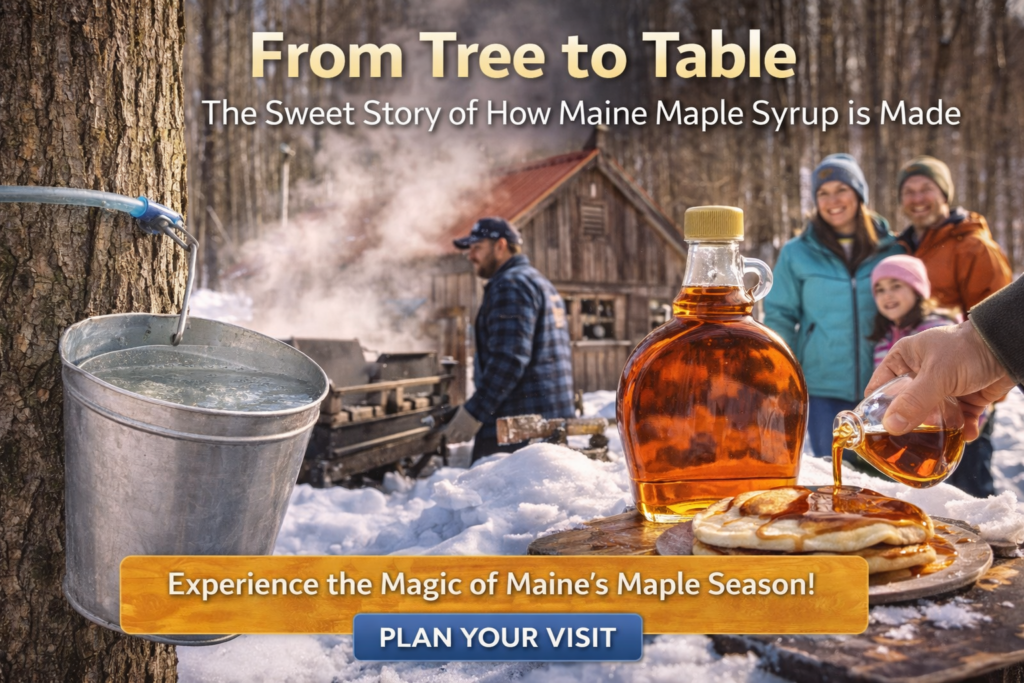
Traditional Tapping: Many local sugarhouses still use the classic method of buckets hung from trees to collect individual drips.
-
Modern Efficiency: Larger producers utilize advanced tubing systems, where plastic lines under vacuum transport the sap directly from the forest to the sugarhouse.
-
The Clock is Ticking: Fresh sap must be processed within hours to avoid spoilage, often requiring syrup makers to work around the clock during peak flow.
The Art of Evaporation
Fresh sap contains only about 3% sugar. To reach the perfect density, it is fed into an evaporator where it is boiled down, releasing dense clouds of sweet-smelling steam. When the liquid reaches 7°F above the boiling point of water, it has reached the ideal sugar density to be classified as pure maple syrup.
Final Processing
Before bottling, we filter the syrup to remove ‘sugar sand’—harmless minerals that can cause cloudiness. We then pour it into sterilized containers and seal it for worldwide enjoyment.
Visit Maine’s Top Maple Producers
Ready to taste the tradition? Experience fresh syrup firsthand at these renowned Maine sugarhouses:
-
Merrifield Farm – Gorham, ME | 📞 (207) 415-3001
-
Balsam Ridge Farm – Raymond, ME | 📞 (207) 655-4474
-
Hilltop Boilers – Newfield, ME | 📞 (207) 793-8850
-
Silloway Maple – Skowhegan, ME | 📞 (207) 858-4403
-
Chandler’s Sugar Shack – Rome, ME | 📞 (207) 397-2171
Looking for more? Explore the full Map of Other Maple Producers.
Pro-Tips for Storing Your Syrup
Pure Maine maple syrup contains no preservatives. To maintain its peak flavor:
-
Refrigerate or keep in a cool, dry place after opening.
-
Freeze it! Properly prepared syrup will not freeze solid, making the freezer an ideal place for long-term storage.
-
Re-Can it: Syrup can be heated to 180°F and canned in sterilized jars for long-lasting shelf life.
The Ultimate Basecamp: Moose River Lookout
While you’re exploring the sugarhouses of the Highlands, find your sanctuary at Moose River Lookout in Rockwood. Nestled along the serene Moose River at the base of the majestic Blue Ridge Mountains, our cabin is the gateway to your next adventure.
-
Direct Trail Access: Step out your back door onto Maine’s Interconnected Trail System (ITS66) for instant snowmobiling or outdoor fun.
-
Unmatched Convenience: Minutes from the best ice fishing, hiking, and sightseeing in the Moosehead Lake region.
Book Your Stay Today:
-
Phone: 800-544-0300
-
Email: [email protected]
-
Address: 4054 Rockwood Rd, Rockwood, ME 04478
-
Website: Moose River Lookout
Table of Contents